
The Biggest Banner Ad Advertising Mistakes and How to Avoid Them
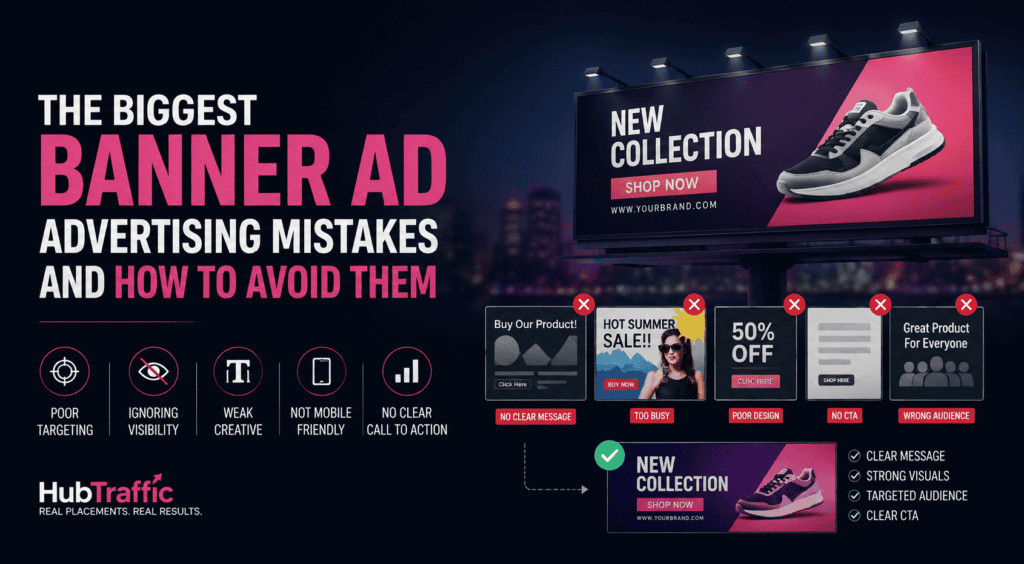
In a digital landscape filled with competing marketing channels, banner advertising continues to be a valuable way for businesses to increase visibility, generate traffic, and build brand awareness. However, success is not guaranteed simply by placing an ad on a website. Many businesses invest time and money into campaigns only to see disappointing results because they overlook critical details that influence performance. Understanding the most common mistakes can help advertisers make better decisions and achieve stronger returns from their campaigns. Whether you are new to banner ad advertising or looking to improve existing campaigns, avoiding these errors can significantly enhance your results.
Focusing on Placement Quantity Instead of Placement Quality
One of the most common mistakes businesses make is believing that more placements automatically lead to better results. While increasing exposure can be beneficial, placing ads on a large number of low-quality websites often produces little value. The quality of the website, its audience, and its relevance to your industry matter far more than the number of placements.
When ads appear on websites that attract the wrong audience, impressions may increase but engagement remains low. This results in wasted advertising budgets and poor conversion rates. Businesses should focus on securing placements on trusted websites that attract visitors who are genuinely interested in their products or services.
This is where experienced advertising partners become valuable. Companies such as Hub Traffic help advertisers secure placements on premium websites with established audiences, ensuring that advertising budgets are invested where they have the greatest potential impact.
Ignoring Creative Design and User Experience
Even the best placement cannot compensate for a poorly designed banner. Many advertisers create banners that are cluttered, difficult to read, or overloaded with information. Visitors often make decisions within seconds, and an ineffective design can cause them to ignore an ad completely.
A successful banner should communicate its message clearly and quickly. Strong visuals, concise copy, and a clear call to action help guide users toward the next step. The design should also align with the brand’s identity while remaining visually appealing within the context of the host website.
Another common mistake is failing to optimize banners for different screen sizes. With mobile traffic accounting for a significant portion of website visits, advertisements must display correctly on smartphones and tablets. Responsive banner designs ensure a consistent experience across devices and prevent businesses from missing valuable opportunities.
Neglecting Audience Targeting and Relevance
Many advertising campaigns fail because they prioritize visibility over relevance. While reaching a large audience may seem attractive, reaching the right audience is far more important. Ads shown to users who have no interest in the product or service are unlikely to generate meaningful engagement.
Understanding customer demographics, interests, and online behavior is essential when planning advertising campaigns. Advertisers should carefully evaluate where their target audience spends time online and choose placements accordingly. Industry-specific websites, niche publications, and relevant content platforms often outperform broader advertising channels because they connect businesses directly with interested users.
Effective targeting also improves brand perception. When advertisements appear in relevant environments, users are more likely to view them as useful rather than intrusive. This creates a stronger connection between the brand and potential customers while increasing the likelihood of conversions.
Failing to Track Performance and Optimize Campaigns
Another significant mistake is treating advertising campaigns as a one-time activity. Many businesses launch banner campaigns and simply wait for results without monitoring performance metrics. Without data, it becomes impossible to understand what is working and what needs improvement.
Metrics such as click-through rates, impressions, engagement levels, and conversions provide valuable insights into campaign effectiveness. Regular analysis allows advertisers to identify successful placements, refine creative assets, and adjust targeting strategies.
Optimization should be an ongoing process rather than a single event. Small adjustments to ad copy, design, placement selection, or audience targeting can often produce substantial improvements over time. Businesses that consistently monitor performance tend to achieve stronger returns because they make decisions based on actual results rather than assumptions.
Professional advertising platforms and placement services can simplify this process by providing access to quality inventory while helping businesses make informed decisions. This allows advertisers to focus on growth while maintaining confidence in their campaign strategy.
Overlooking Long-Term Brand Building Benefits
Many businesses judge advertising solely by immediate conversions. While direct sales are important, banner advertising also plays a critical role in long-term brand awareness. Not every visitor will click an ad the first time they see it, but repeated exposure can increase familiarity and trust.
Consumers often interact with multiple touchpoints before making a purchasing decision. Banner campaigns contribute to this journey by keeping brands visible throughout the research and decision-making process. Businesses that focus only on short-term results may underestimate the broader value of consistent advertising exposure.
A balanced strategy combines performance goals with brand-building objectives. High-quality placements on reputable websites strengthen credibility while increasing recognition among target audiences. Over time, this can contribute to improved customer trust, stronger market positioning, and increased conversion opportunities.
Successful advertisers understand that banner advertising works best when supported by thoughtful placement strategies, compelling creative assets, and continuous optimization. Avoiding common mistakes such as prioritizing quantity over quality, neglecting design, ignoring audience relevance, and failing to track performance can dramatically improve campaign outcomes.
For businesses looking to maximize the effectiveness of their advertising investments, working with experienced partners can make a meaningful difference. By focusing on premium placements, targeted exposure, and measurable results, Hub Traffic helps brands connect with the right audiences and achieve stronger digital marketing performance.
